Imagine hearing on the news that a powerful hurricane is heading towards the United States, while a typhoon is approaching Japan and a cyclone is moving towards Australia. They sound like three completely different types of storms, don't they?
Surprisingly, they are all exactly the same type of storm.
The only real difference is where they form around the world.
Every year these enormous storms capture headlines because of the powerful winds, heavy rainfall, and flooding they can bring. Some have changed the course of history, destroyed entire towns, and even helped scientists develop better ways to predict dangerous weather. But how do these storms form, and why do they have three different names?
Let's find out.
What Is a Tropical Cyclone?
The scientific name for hurricanes, cyclones, and typhoons is a tropical cyclone.
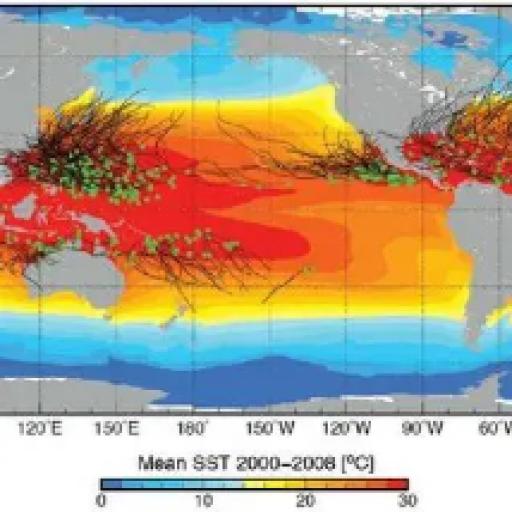
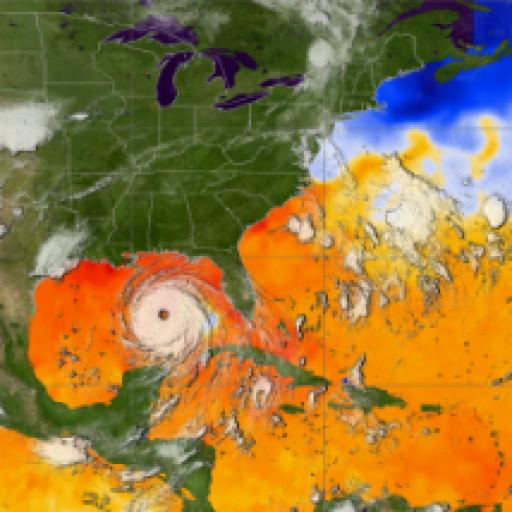
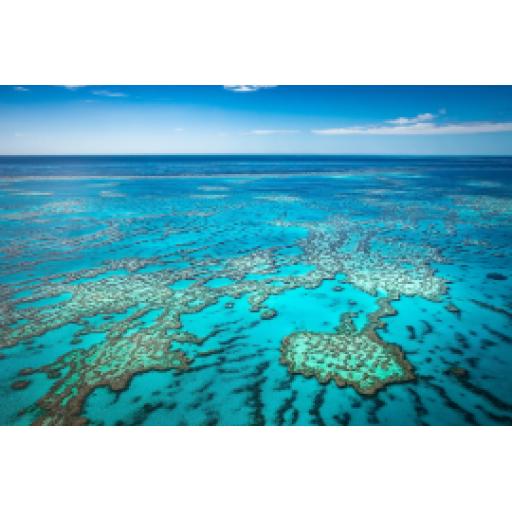
These enormous rotating storms form over warm tropical oceans when sea temperatures reach around 27°C or higher. Warm water heats the air above it, causing huge amounts of moisture to evaporate into the atmosphere. As this warm, moist air rises, it cools and condenses into towering storm clouds.
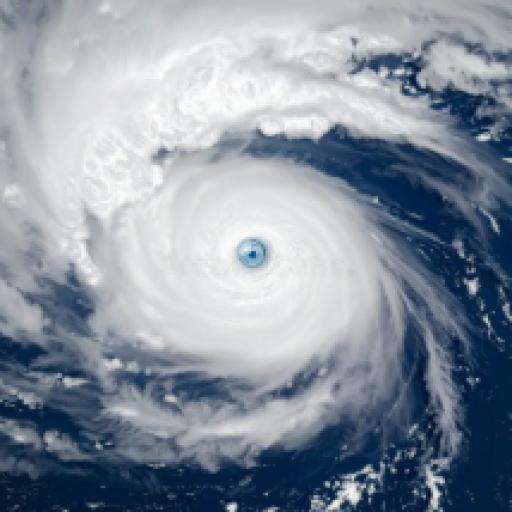
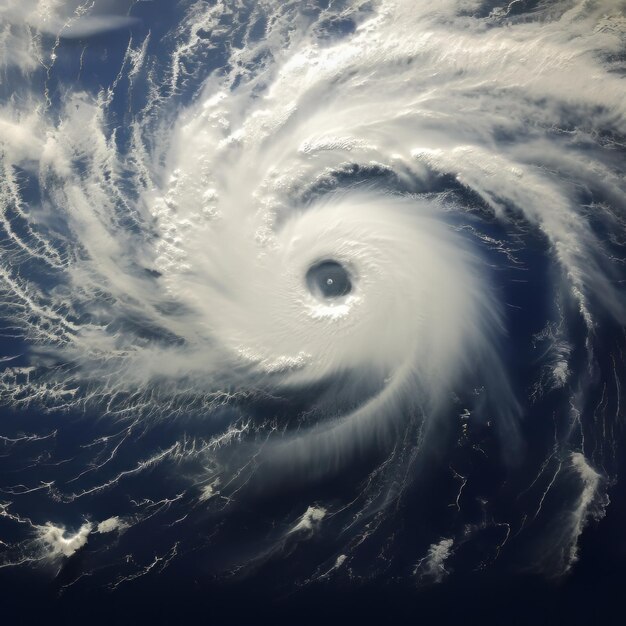
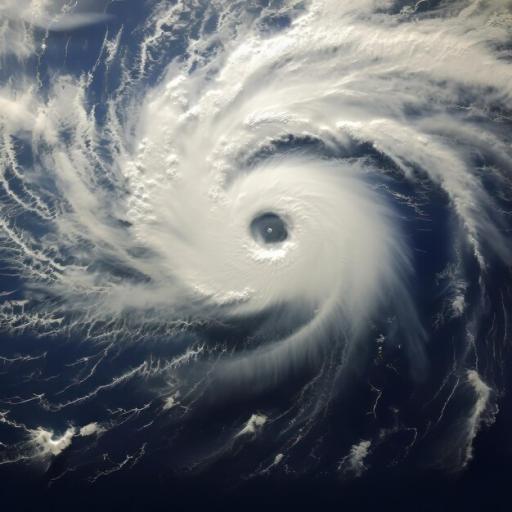
As more warm air rushes in to replace it, the storm grows larger and more powerful. At the same time, the Earth's rotation creates a spinning motion known as the Coriolis effect, giving the storm its familiar spiral shape that can easily be seen from space.
Once the storm's sustained wind speeds reach 119 kilometres per hour (74 miles per hour), it officially becomes a tropical cyclone.
Interestingly, tropical cyclones can never form directly above the Equator. Although the oceans are warm enough, the Coriolis effect is too weak there to make the storm rotate.
Why Do They Have Different Names?
Although they are the same weather phenomenon, their name depends entirely on where they develop.
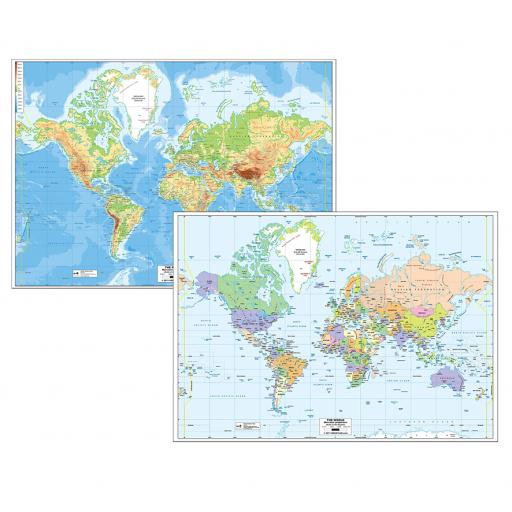
Storms that form over the Atlantic Ocean and the eastern North Pacific Ocean are called hurricanes. These often affect countries such as the United States, Mexico, Cuba, and many Caribbean islands.
Storms developing in the western North Pacific Ocean are known as typhoons. These regularly impact Japan, China, Taiwan, Vietnam, and the Philippines.
Those forming in the Indian Ocean and the South Pacific Ocean are called cyclones. These can affect Australia, India, Bangladesh, Madagascar, Fiji, and many other island nations.
Meteorologists use the scientific term tropical cyclone because all three storms form in exactly the same way.
The word "hurricane" comes from Huracán, the name of a powerful storm god worshipped by the Taíno people of the Caribbean. When Spanish explorers arrived in the Caribbean during the late 1400s, they adopted the name, and it has remained in use ever since.
Where Do Tropical Cyclones Happen Most Often?
The western Pacific Ocean is the most active tropical cyclone region on Earth, producing around 25 tropical storms every year. Many develop into powerful typhoons because the ocean remains warm across a huge area for much of the year.
The Atlantic hurricane season officially runs from 1 June until 30 November each year. During this period, warm ocean temperatures and favourable weather conditions allow storms to develop across the Atlantic and Caribbean. An average season produces around 14 named storms, although some years are much busier than others.
Around Australia, the cyclone season usually lasts from November to April, when ocean temperatures rise during the Southern Hemisphere summer. Northern Australia experiences some of the world's strongest cyclones because warm tropical waters surround much of its coastline.
Although these storms usually form over the ocean, they often become most dangerous when they reach land. Strong winds can destroy buildings, torrential rain can cause severe flooding, and powerful storm surges can push seawater several metres inland, flooding coastal communities in just a few hours.
The Largest Tropical Cyclone Ever Recorded
One of the most extraordinary tropical cyclones ever recorded was Typhoon Tip, which formed over the western Pacific Ocean on 4 October 1979.
As it travelled across warm ocean waters, the storm grew to an astonishing 2,220 kilometres (1,380 miles) wide, making it the largest tropical cyclone ever measured. To put that into perspective, it was almost as wide as the distance from London to Rome, or large enough to cover much of Western Europe.
Typhoon Tip reached its greatest strength on 12 October 1979, producing sustained winds of around 305 kilometres per hour (190 miles per hour). It also recorded the lowest air pressure ever measured inside a tropical cyclone, a record that still stands today. Low air pressure allows stronger winds to develop, making the storm incredibly powerful.
Fortunately, Tip weakened before reaching mainland Japan. However, when it made landfall on 19 October 1979, it still caused widespread flooding, landslides, and damage to homes and infrastructure. At least 99 people lost their lives, while thousands more were affected by the storm's heavy rain and strong winds.
Typhoon Tip remains one of the greatest examples of just how enormous and powerful nature can be.
One of the Most Destructive Hurricanes in History
While Typhoon Tip was the largest, Hurricane Katrina became one of the most devastating natural disasters in modern history.
Katrina formed over the Bahamas on 23 August 2005 before rapidly strengthening over the warm waters of the Gulf of Mexico. It made landfall in the United States on 29 August 2005, bringing destructive winds, torrential rain, and an enormous storm surge.
The greatest disaster occurred in New Orleans, where flood defences called levees failed. Around 80% of the city flooded, leaving entire neighbourhoods underwater for weeks.
More than 1,800 people lost their lives, over one million people were displaced, and the total cost of the damage exceeded 125 billion US dollars.
Hurricane Katrina completely changed the way emergency services prepare for major storms. Since 2005, forecasting technology, evacuation planning, and flood protection have all improved significantly, helping communities respond more quickly when hurricanes threaten.
How Do Scientists Predict Tropical Cyclones?
Today, scientists can often predict the path of a tropical cyclone several days before it reaches land, giving people valuable time to prepare.
Weather satellites orbiting the Earth take detailed images of storms every few minutes. These allow meteorologists to measure the size of the storm, watch how quickly it is growing, and estimate where it is likely to travel.
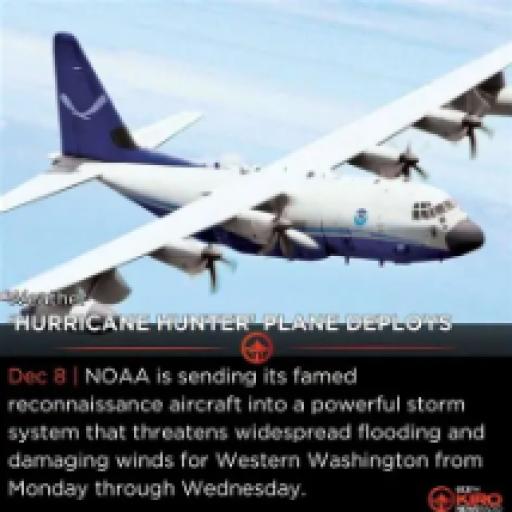
Special aircraft known as Hurricane Hunters even fly directly into hurricanes. Although this sounds dangerous, the aircraft are specially built to withstand severe weather. They pass through the eye of the storm, where conditions are often surprisingly calm, before flying through the powerful eyewall to collect information about wind speeds, air pressure, temperature, and humidity.
Scientists also use floating ocean buoys to measure sea temperatures and wave heights, while powerful computer models perform millions of calculations to predict where the storm will travel and how strong it may become.
Thanks to these advances, millions of people now receive warnings several days before a tropical cyclone arrives, allowing families to protect their homes or evacuate to safety.
Why Are Storms Given Names?
Imagine trying to warn millions of people about "Storm Number Seven." It would quickly become confusing.
Giving storms names makes it much easier for emergency services, news reporters, pilots, and the public to communicate about dangerous weather.
The modern naming system began in 1953, when hurricanes in the Atlantic were first given official female names. Since 1979, male and female names have alternated.
Today, the World Meteorological Organization prepares lists of names years in advance for different parts of the world.
If a storm causes exceptional destruction or loss of life, its name is permanently retired out of respect for those affected. Famous names such as Katrina, Haiyan, and Sandy will never be used again.
Fun Facts!
• The towering thunderclouds inside a tropical cyclone can reach heights of 16 to 18 kilometres, almost twice the height of Mount Everest.
• A tropical cyclone helps move heat away from the tropics towards cooler parts of the world, making it an important part of Earth's climate system.
• Many people believe toilets flush in different directions in each hemisphere because of the Coriolis effect. In reality, the effect is far too weak to influence a toilet. It only becomes important over huge distances, which is why it helps tropical cyclones spin.
• Storm surges are often more dangerous than the wind itself. Rising seawater pushed ashore by a cyclone causes many of the deaths and the greatest amount of flooding.
• Scientists have observed birds, sharks, and even frogs changing their behaviour before major storms, possibly because they can detect changes in air pressure before humans can.
Final Thoughts
Whether they are called hurricanes, cyclones, or typhoons, these incredible storms are all part of the same powerful weather system. Their different names simply tell us where they formed around the world.
Although tropical cyclones can cause enormous destruction, they have also helped scientists learn more about our planet's weather. Advances in satellites, aircraft, computer modelling, and forecasting mean that millions of people now receive life-saving warnings before a storm reaches land.